


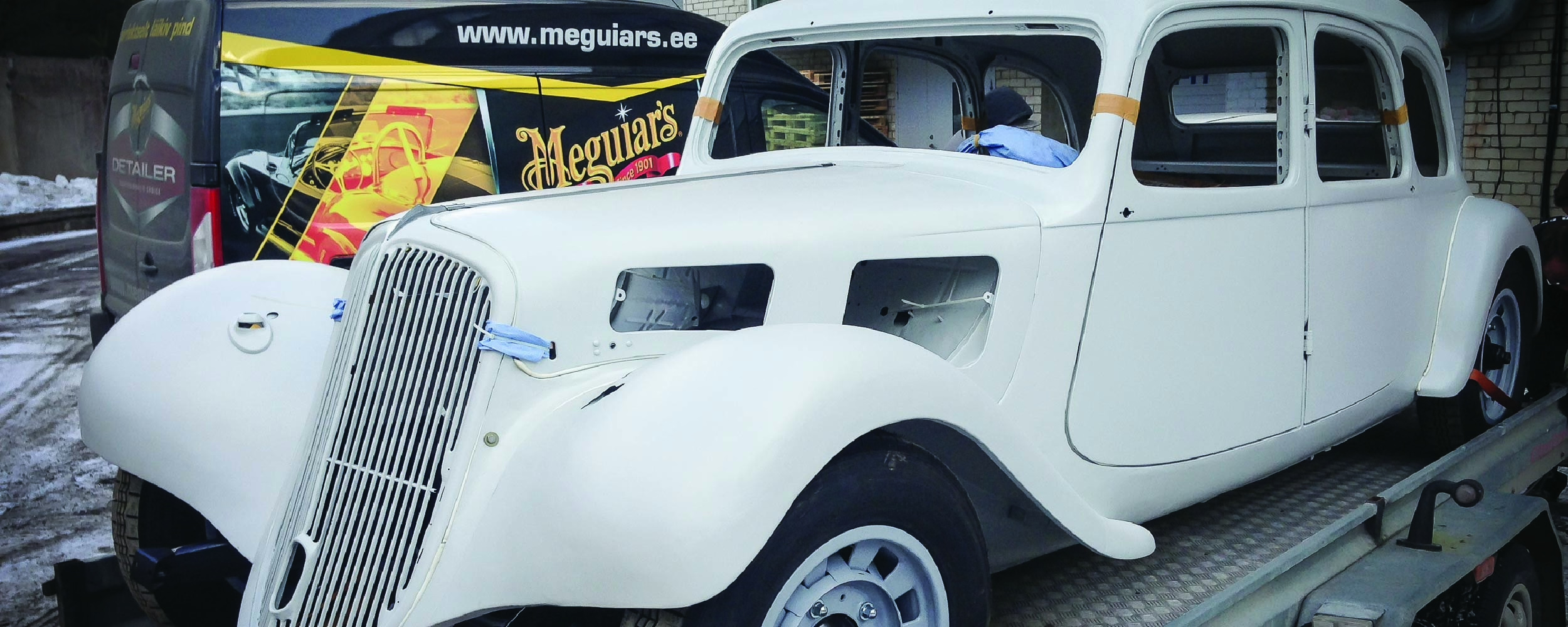
The pre-war Citroën Traction Avant has been one of the most fascinating and complex projects we have ever worked on at Benefit AutoKlassika. It is not a particularly expensive car, but the 9-seat Familiale version makes it a rare find. Very few have survived: the extended body and a few engineering flaws by André Citroën's team caused the bodies to crack and break just a couple of decades after production.
A rare Finnish survivor
This car was sold new in Finland before the war and is the only one of its kind in the country. Its owner is a well-known figure in Finnish automotive circles, a Citroën expert who also spent years living in Paris. He also owns an extremely rare pre-war Citroën TA coupé, restored in Paris, which once spent a winter with us. That gave us a chance to study French restoration work up close: authentic, but without the paint finish we know we can achieve.
The scale of the damage
After seeing the car in Finland, our first decision was not to take on the job. It was simply too complex and the car was in too poor condition. The owner, however, was determined and pointed to the car's historical importance. Thanks to his enthusiasm, the Citroën eventually arrived in our workshop.
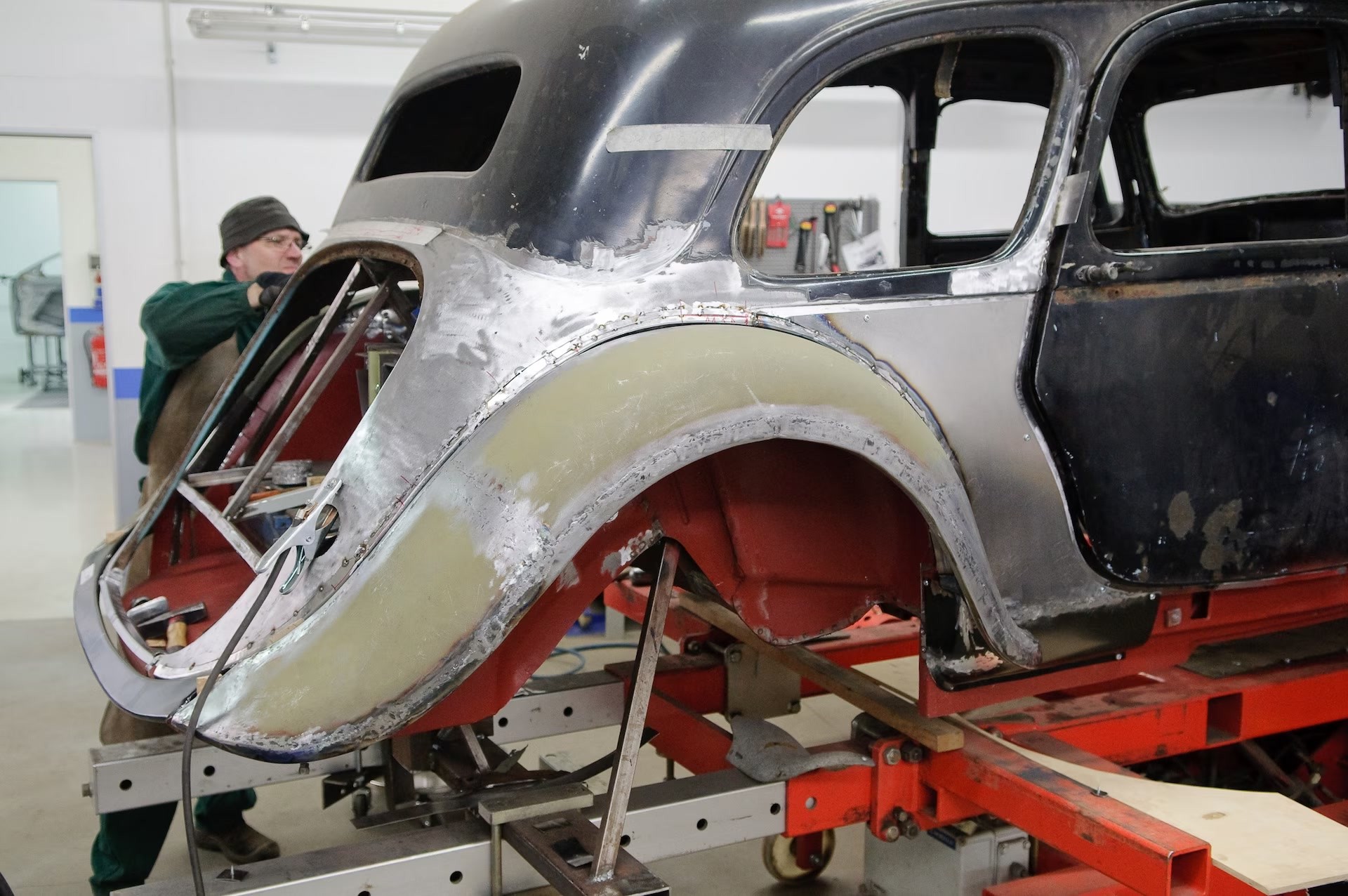
It quickly became clear that the body was practically broken in half and sagged about 5 cm in the middle. Almost the entire lower 30 cm of the body would need to be rebuilt. As our sheet metal specialist put it: "We're basically building a new car. We can reuse the roof, the pillars, part of the rear section, a piece of the front and the door frames."
Structural rebuild
We started by mounting the car on a heavy body jig and taking full measurements. The original factory dimensions and body repair manuals, which the owner sourced from France, proved invaluable.
Because the body was too weak to give any solid reference points, we built a "spine" of heavy steel beams and fixed it to the jig. The body sections were then hung from this frame, so they could be moved, measured and fixed in place one by one. Once the measurements were right, we locked every critical point to the jig, and the doors began to fit perfectly in their openings again.
Scars of war
While cleaning the body we found numerous bullet holes. Some had been neatly repaired with gas welding, others were left exactly as they were after the shots. The car had clearly taken part in Finland's defensive battles, which makes it an object of real historical interest. Before any repairs, we photographed and documented every battle scar, because preserving that history mattered as much as the metalwork.
See all photos of this project in our restorations gallery. Planning work on your own classic? Get in touch with us.